
Budapest rarely gives you just one version of a night out. You can start with wine or cocktails, disappear into the courtyards of the old Jewish Quarter, move on to a club after midnight or spend the evening overlooking the Danube without setting foot on a dance floor.
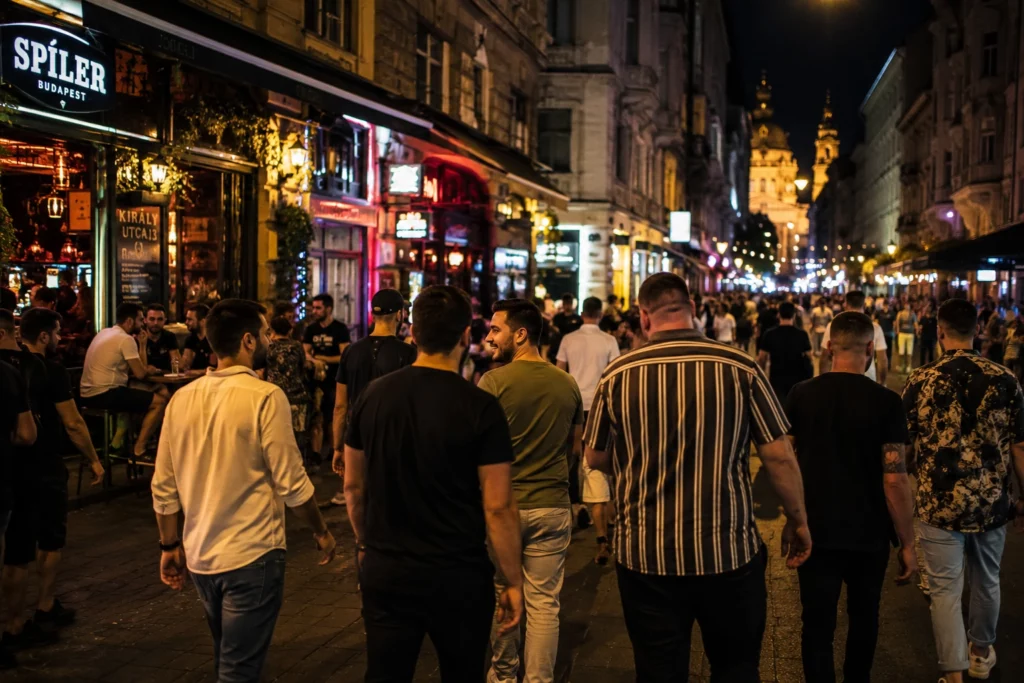
Ruin bars made the city internationally famous, but they are only one part of its after-dark character. Cocktail bars, large club complexes, smaller music-led venues, rooftops and adult nightlife all attract different crowds.
The useful question is not simply where to party in Budapest. It is where to go for the kind of night your group actually wants.
What Is Budapest Nightlife Really Like?
Budapest nightlife is compact enough to explore without spending half the evening in taxis, but varied enough to suit completely different groups. You can begin with cocktails or Hungarian wine, move into a lively ruin bar and finish in a nightclub — or avoid the dance floor entirely and spend the evening in pubs, rooftops or smaller music-led venues.
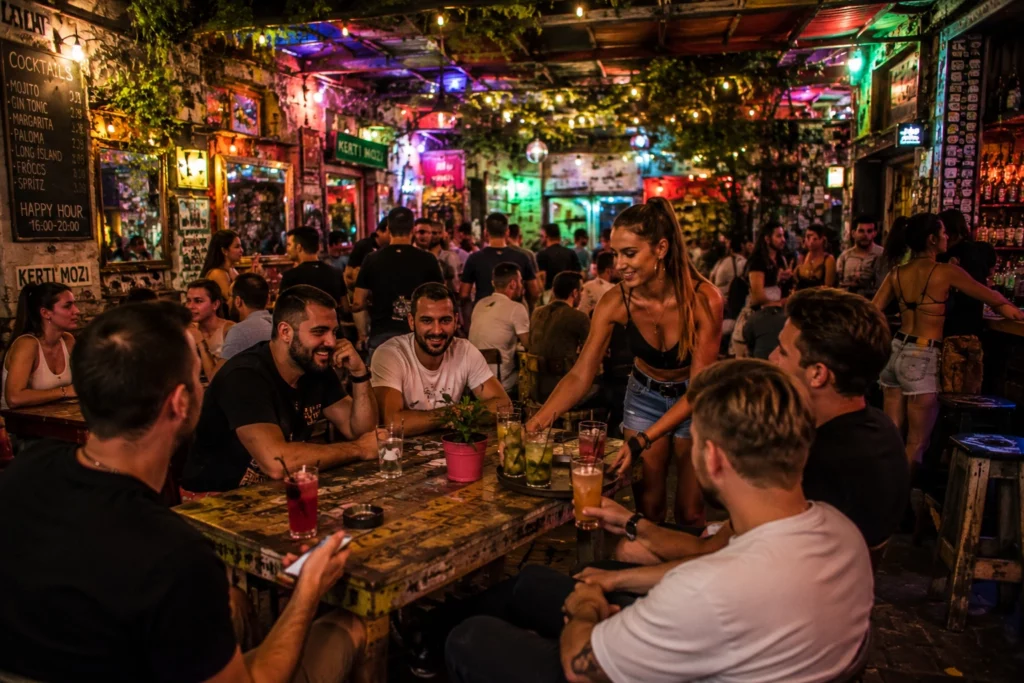
The city’s best-known nightlife is concentrated around the inner Jewish Quarter, and the most famous venues are undeniably tourist-heavy. That is not necessarily a disadvantage. Their busy courtyards, international crowds and unusual interiors are part of the experience many visitors come to Budapest to enjoy. Groups looking for something quieter or more local simply need to choose their stops more carefully.
Ruin bars are an important part of Budapest nightlife, but they are not the whole story. The city also offers cocktail bars, wine bars, traditional pubs, mainstream clubs, electronic music venues, rooftops and adult entertainment. Some suit couples or small groups, while others work better for a large party that needs space and flexibility.
Budapest nights usually work best when they are allowed to build naturally. Choose one or two places that genuinely matter, then leave enough freedom to stay longer, move on or change direction when the atmosphere calls for it. The following sections explain which nightlife areas and venue types are most likely to suit your evening.
Where Is the Main Nightlife Area in Budapest?
The main nightlife area in Budapest is located in central Pest. Its busiest section runs through the inner part of District VII, with neighbouring District VI providing an easy extension and District V offering a more polished alternative closer to the Danube.
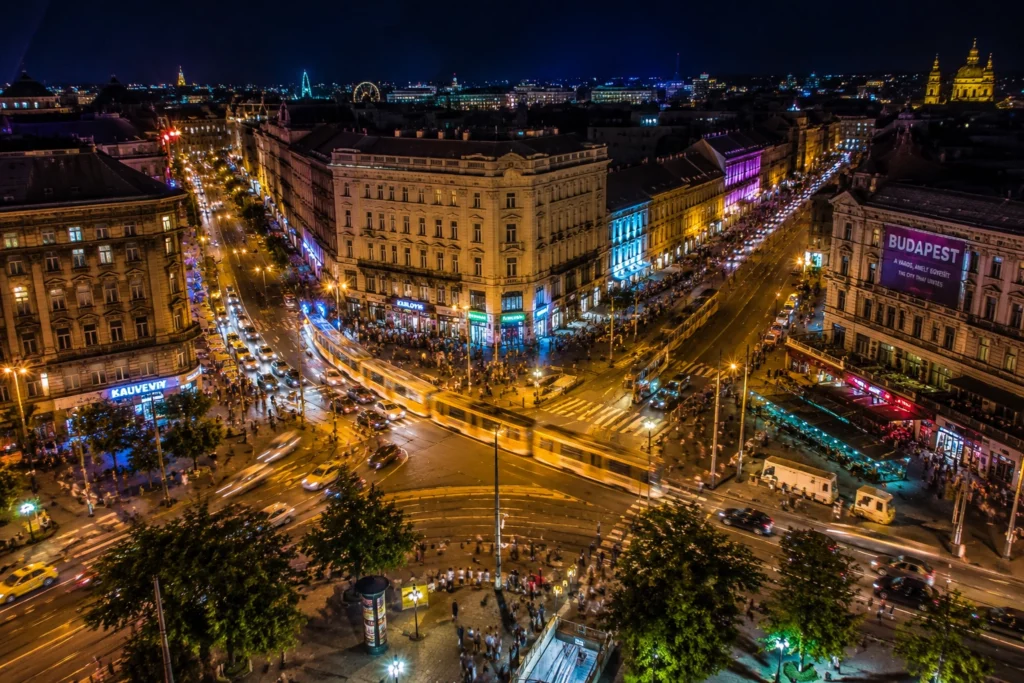
These areas sit close together. From Deák Ferenc tér, you can walk to several different nightlife scenes without committing the whole evening to one district. This makes central Pest especially convenient for visitors who want to begin with drinks, explore a few bars and decide later whether to continue to a club.
District VII – the party centre
The inner part of District VII, also known as Erzsébetváros and home to the historic Jewish Quarter, contains Budapest’s highest concentration of bars, ruin pubs and late-night venues.
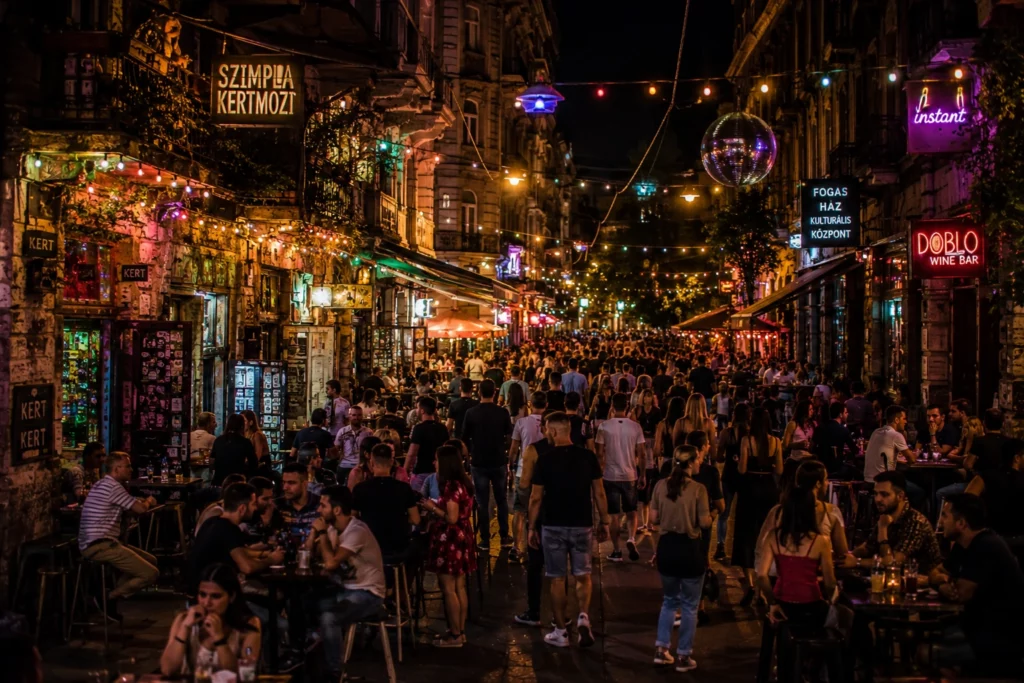
Király utca, Kazinczy utca, Dob utca, Akácfa utca and the streets around Gozsdu Udvar form the core of the nightlife district. Most venues are within a short walk of one another, making this the easiest area for spontaneous bar-hopping.
The atmosphere changes from street to street. Gozsdu is busy, visible and highly international, while Kazinczy utca carries more of the city’s ruin-bar identity. Quieter bars and restaurants can still be found only a few streets away from the heaviest crowds.
District VII is the strongest starting point for groups that want maximum choice with minimum transport. It is also the most tourist-oriented nightlife area in Budapest, so choosing your stops deliberately usually produces a better evening than simply following the largest crowd.
District VI – drinks before the crowds
District VI stretches around Andrássy út, Oktogon and Nagymező utca. It connects naturally with District VII, so the boundary between the two rarely matters during a night out.
This area works well for dinner, cocktails or first drinks before moving towards the busier Jewish Quarter. The atmosphere is generally less concentrated than around Gozsdu, with more restaurants, cocktail-led venues and places where conversation is still possible.
For groups that do not want to begin the evening inside the busiest party streets, District VI provides an easy transition without creating additional transport.
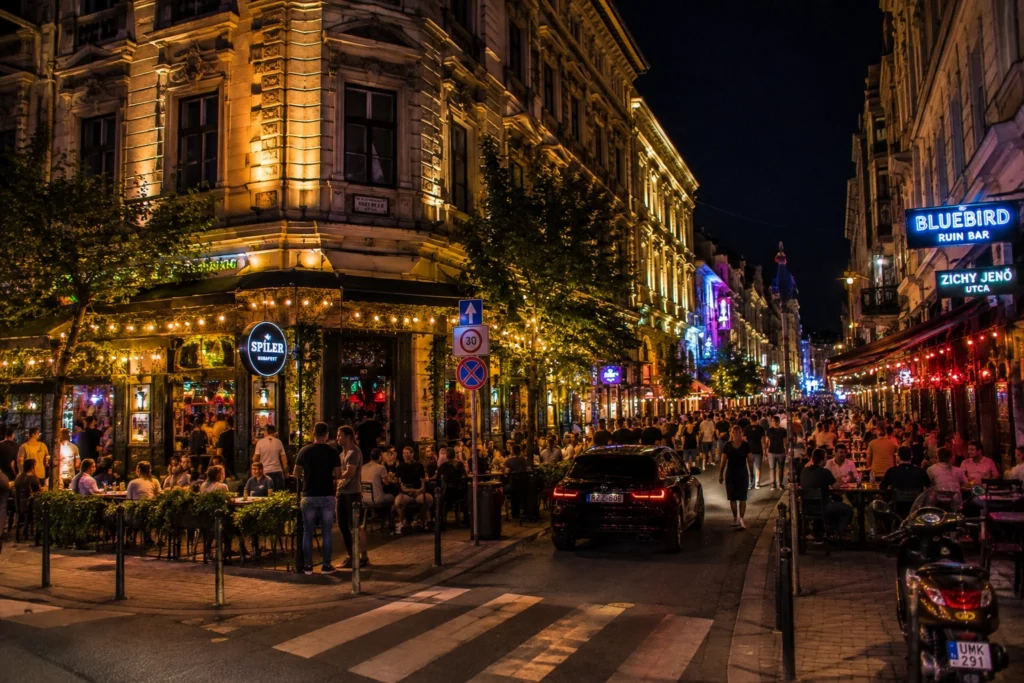
District V and the Danube – cocktails, rooftops and city views
District V offers a smarter and more destination-led version of Budapest nightlife. Cocktail bars, hotel bars, rooftops and venues close to the Danube make it better suited to smaller groups, dates and evenings built around atmosphere rather than continuous bar-hopping.
The riverfront gives the night a different character. Illuminated bridges, views towards Buda and drinks near the Danube can create a stronger sense of occasion than the enclosed streets of the party district.
Prices and dress expectations are often higher here, and reservations become more important when a particular rooftop or cocktail bar matters to the group.
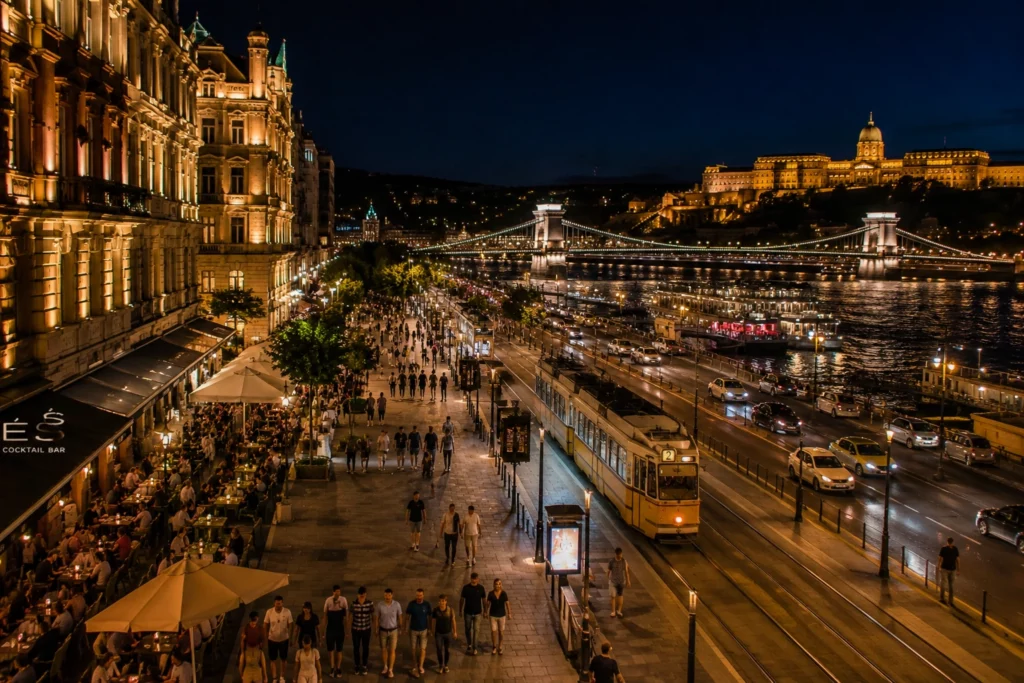
Beyond the central nightlife districts
Budapest also has independent bars, live music and electronic venues in Districts VIII and IX, as well as across the river in Buda.
These areas are better approached with a specific destination in mind. Venues are spread farther apart, so they are less suitable for unplanned bar-hopping but can be a good choice for visitors who want to move beyond the busiest tourist circuit.
For a first night in Budapest, central Pest remains the easiest base. Travel farther when a particular venue, event or music programme gives you a reason to do so.
Budapest Bars – Where the Night Usually Starts
Budapest bars range from serious cocktail rooms and Hungarian wine bars to craft-beer pubs, casual drinking spots and venues that become livelier as the evening develops. The right choice depends less on a universal ranking and more on the size of your group and the kind of night you want.
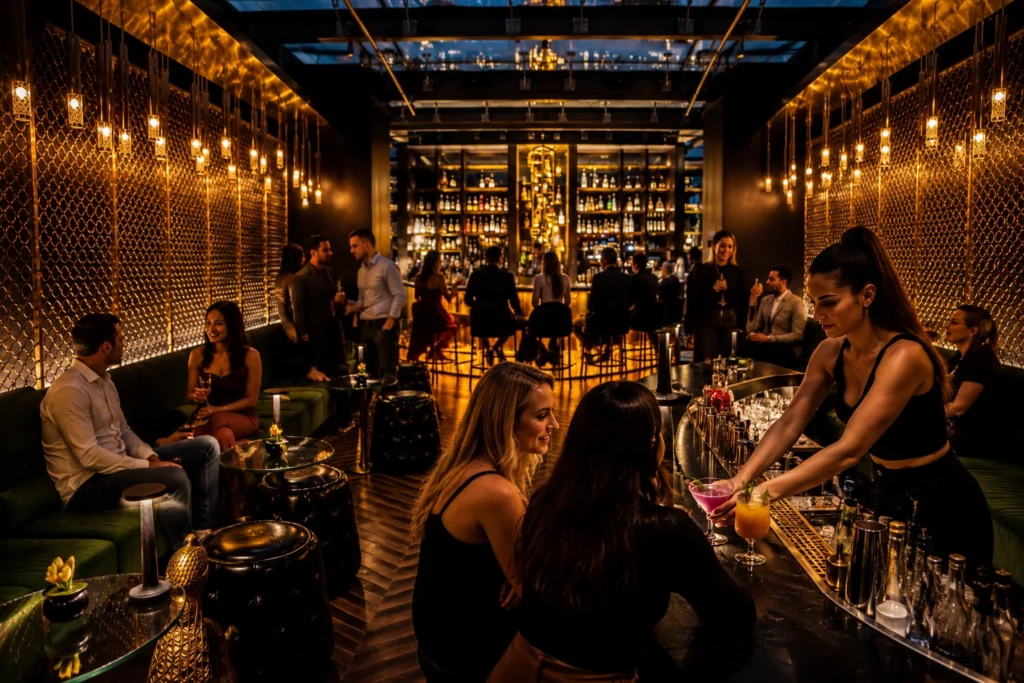
A bar can be the main destination, a relaxed stop before dinner or the point where the group decides whether to continue towards a ruin pub or nightclub. Not every venue needs to become a highlight of the weekend. Sometimes the most useful stop is simply somewhere with cold drinks, enough room and no pressure to leave after one round.
Match the bar to the group
Cocktail bars and wine bars generally work best for couples and smaller groups that want table service, conversation and a slower pace. Hungarian wine is worth considering before dinner, while Budapest’s craft-beer pubs offer more variety than the standard lagers found throughout the busiest tourist streets.
Larger groups usually need a more flexible setting. Casual pubs, standing bars and bigger ruin-style venues make it easier for people to arrive, order and move around without requiring one table for the entire party.
The venue should fit the group, not the other way around. A highly rated cocktail bar can still be the wrong choice for fourteen people, while a straightforward pub may work perfectly.
Reserve the stops that matter
Budapest makes spontaneous drinking easy for small groups. With ten, twelve or fifteen people, arriving without notice becomes less reliable.
A venue can have available space without being able to seat or admit a large group together. This is especially common on Friday and Saturday nights, at smaller cocktail bars and at venues with stricter group policies.
If sitting together or visiting a particular venue matters, book that stop in advance. Leave the rest of the evening flexible. Groups comparing suitable venues can also use our guide to the best stag do bars in Budapest.
Let the atmosphere build
Some Budapest bars are best for early drinks, while others become louder and more social later in the evening. A place that feels relaxed after dinner may develop enough energy that the group no longer needs to move elsewhere.
Avoid changing venue simply because a fixed itinerary says it is time to leave. If the group is enjoying the atmosphere, staying for another round is often a better decision than forcing everybody towards the next address.
This flexibility is one of the main advantages of going out in central Budapest. When you eventually want something more distinctive, the city’s ruin bars provide the natural next step.
Ruin Bars – Budapest’s Most Recognisable Nightlife
Ruin bars are the part of Budapest nightlife most closely associated with the city. They began by giving neglected buildings and courtyards a new purpose, using mismatched furniture, recycled objects, art and improvised decoration instead of creating conventional polished bars.
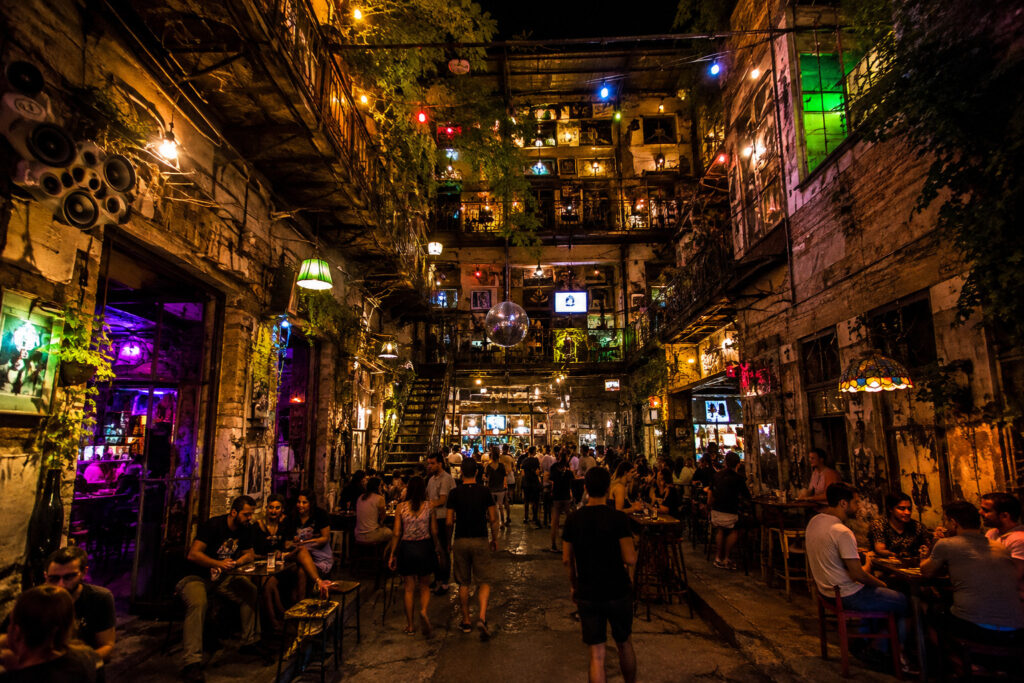
The concept has since developed into several different experiences. Some ruin bars still feel relaxed and unconventional, while the largest venues now attract international crowds and operate more like major nightlife destinations. Both can be enjoyable, but they suit different expectations.
What to expect from a Budapest ruin bar
A ruin bar may contain several rooms, courtyards, bars and music areas inside one building. Exploring the venue is often part of the experience, especially for first-time visitors who have never seen Budapest’s mix of historic architecture and deliberately chaotic decoration.
The largest locations can become extremely busy. They work well for groups that want a lively international atmosphere, plenty of space and the freedom to move between different areas. Smaller venues are usually better for conversation, local drinks and a slower evening.
Dress codes are generally relaxed, although individual door policies still apply. Comfortable footwear is sensible because older buildings can include uneven floors, stairs and open courtyards.
Choose the experience, not just the ruin-bar label
Not every venue using the ruin-bar name offers the same atmosphere. One may feel like a sightseeing attraction with drinks, while another behaves more like a neighbourhood pub or late-night party venue.
Decide whether your priority is unusual surroundings, a busy crowd, affordable drinks, music or somewhere suitable for a large group. That choice is more useful than visiting a place only because it appears on every Budapest checklist.
Our guide to the best ruin bars in Budapest compares the main options and explains which venues suit different groups.
A ruin bar can be the centre of the night or simply the bridge between early drinks and a club. If dancing is the main objective, Budapest’s dedicated nightlife venues provide the next stage.
Clubs and Late-Night Dancing
Budapest clubs range from large mainstream venues with familiar music and several dance floors to smaller spaces built around electronic music, live performances or a particular crowd. Choosing the right type matters more than finding the venue with the longest queue.
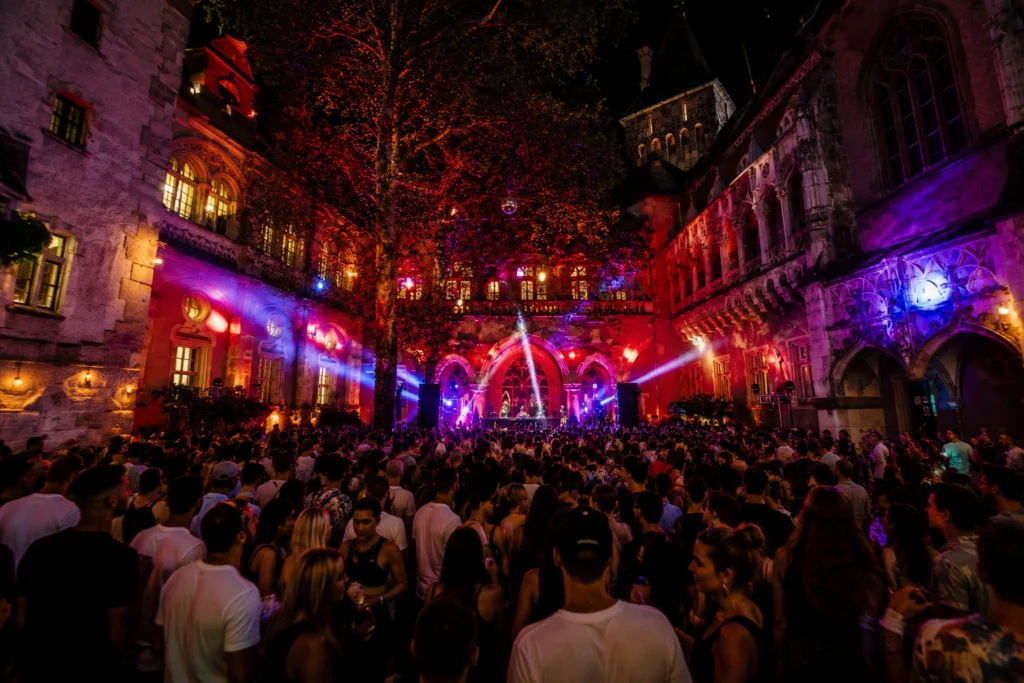
A club should match the group’s music, preferred atmosphere and willingness to deal with door policies. A venue that works for a couple of dedicated techno fans may be a poor choice for a mixed group that simply wants recognisable music and somewhere to dance.
Mainstream club or music-led night?
Mainstream clubs are generally the safest option for mixed groups. Multiple rooms, commercial music and larger capacities make it easier for people with different tastes to enjoy the same venue.
Electronic and music-led clubs require a more deliberate choice. Their event programme, DJ and audience can change from one night to another, so the venue name alone does not tell you what the experience will be.
Open-air and seasonal clubs add another possibility during warmer months, but opening dates and programmes depend on the weather and the event calendar. Our guide to the best nightclubs in Budapest compares the main venues and helps you choose according to music, atmosphere and group type.
Timing and door policies matter
Budapest clubs generally become busier later than bars and ruin pubs. Arriving too early can mean walking into an empty dance floor, while leaving the decision until the busiest part of the night can create queues or admission problems.
Entry is never guaranteed simply because a venue is open. Door staff may consider clothing, behaviour, intoxication and group size. Large groups are more visible and may be asked to split into smaller sets at the entrance.
Smart casual clothing is the safest choice when a particular club matters. Avoid arriving visibly drunk, keep identification available and check whether tickets or reservations are required for the specific event.
Go independently or arrange the club night?
Small groups can usually choose a club during the evening and handle entry themselves. Larger groups have more to consider, including admission, meeting points, table reservations and keeping everybody together.
An organised club night makes sense when the group wants a fixed final venue or does not want to negotiate entry after several hours of drinking. Our Budapest clubbing package includes coordinated entry and can be upgraded with options such as a reserved table or Party Hostess service.
Whichever approach you choose, treat the club as the planned finish rather than another quick stop. One suitable venue at the end of the night usually works better than moving between several crowded dance floors.
Strip Clubs and Adult Nightlife in Budapest
Adult entertainment is a visible part of Budapest nightlife, but it is also one of the categories where choosing the venue carefully matters. Finding a club is easy; understanding its prices, rules and reputation before entering is more important.
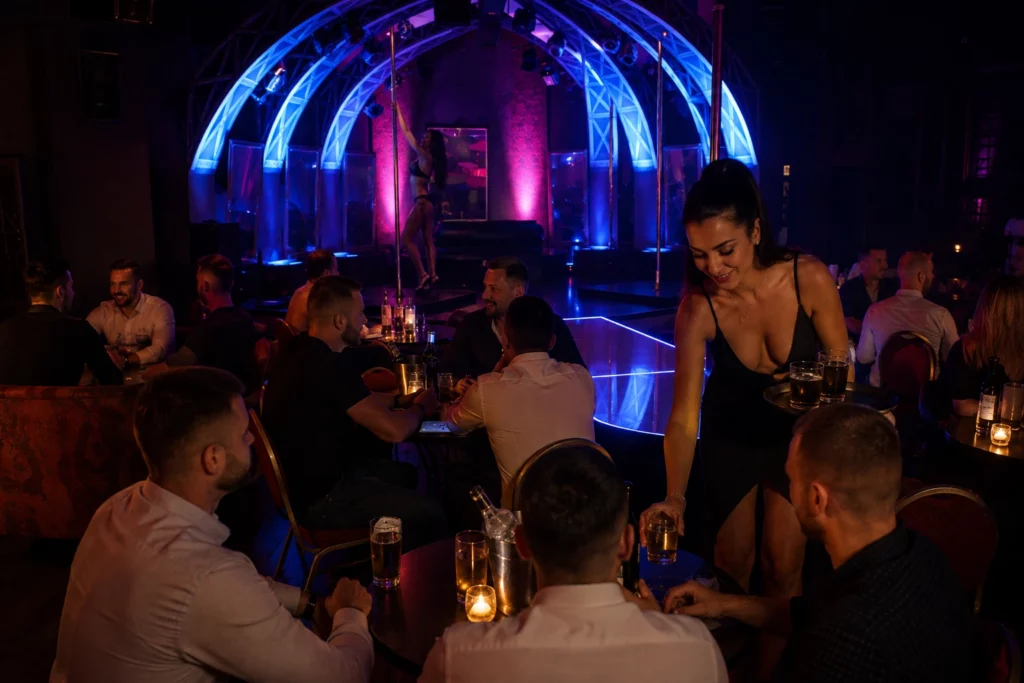
Strip clubs vary considerably in atmosphere and pricing. Some operate as straightforward late-night venues, while others rely on drink minimums, table charges or additional entertainment fees. All adult venues and shows are strictly for guests aged 18 or over.
Transparency matters more than the sales pitch
Before entering, check the admission price, drink prices, payment rules and whether any minimum spend applies. Do not assume that an invitation, free entry or welcome drink means the rest of the visit will be inexpensive.
Avoid following unsolicited street promoters or taxi drivers to an unfamiliar venue. Choose the destination yourself, check the price list before ordering and confirm the cost of any additional service in advance.
Card payments may be available, but always check the amount and currency displayed on the terminal before approving the transaction. Keep receipts where possible and question anything that does not match the agreed price.
Our Budapest strip club guide explains what to expect, how to choose a venue and which warning signs should make you leave.
Strip club or pre-booked adult entertainment?
A strip club suits groups that want the venue itself to remain part of the night. The group can decide how long to stay and continue elsewhere when ready, but admission and seating can become less predictable during busy periods.
Pre-booked entertainment offers a more controlled alternative. The time, location, price and format can be agreed before the evening, whether the show takes place at suitable accommodation or as part of another private activity.
Our sexy stag do activities in Budapest guide compares private shows, adult dinners, wrestling and performer-led experiences for groups that prefer arranged entertainment to visiting a strip club.
The right choice depends on the group and the groom. Adult entertainment should be agreed in advance rather than added as an uncomfortable surprise for somebody who clearly does not want it.
If adult nightlife is part of the plan, prioritise clear pricing, reputable organisation and respect for everyone involved.
Rooftop Bars and Nights with a View
Budapest rooftop bars offer a completely different atmosphere from the enclosed streets and courtyards of the party district. From above the city, domes, church towers, the Danube, illuminated bridges and the Buda Hills become part of the evening.
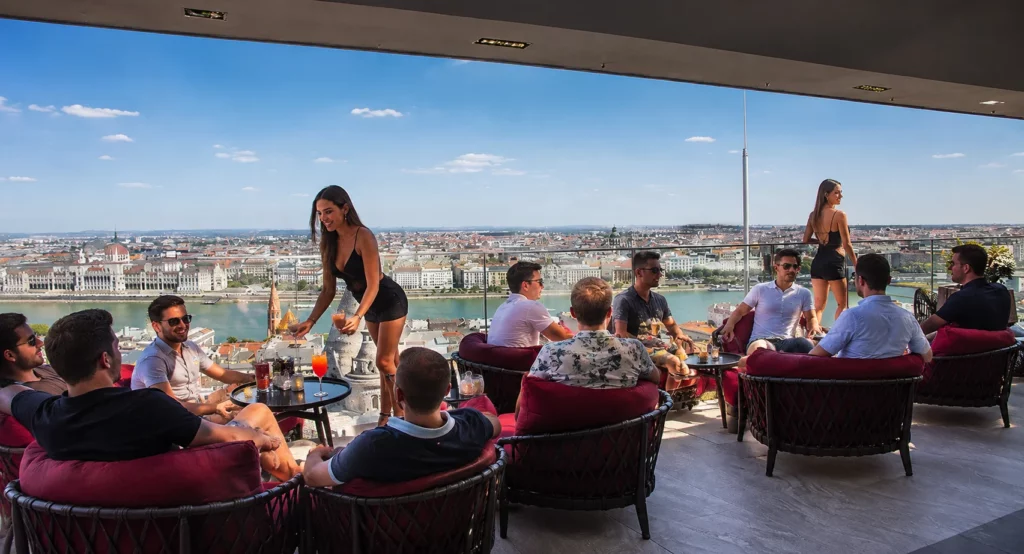
These venues work best when the view and setting matter as much as the drinks. They are well suited to dates, smaller groups, pre-dinner cocktails and celebrations that need a more polished beginning.
Choose the view and the right time
Sunset and late night produce different experiences. Arriving before dark gives you the changing skyline and usually a calmer atmosphere, while later reservations feel more like a traditional night out.
Not every rooftop offers the same view. Some look across the central rooftops of Pest, while others face the Danube, Buda Castle or the city’s illuminated landmarks. Decide whether the group wants scenery, cocktails, music or a lively crowd before choosing the venue.
Opening hours and outdoor seating can depend on the season and weather. Even during warmer months, wind or rain may close part of a terrace. Check the venue’s current arrangements if the rooftop is an important part of the evening.
Reservations, clothing and group size
Rooftop bars generally have less space than large pubs or ruin venues. Reservations become increasingly important for weekend visits, sunset tables and groups that want to sit together.
Smart casual clothing is the safest choice. Sportswear, costumes and visibly intoxicated behaviour may create problems at the entrance, even when the venue does not publish a detailed dress code.
Large stag groups should confirm acceptance before arriving. A rooftop that works perfectly for four people may be unable to accommodate fourteen without advance planning. Splitting the group across several tables can also change the atmosphere you were expecting.
Prices are normally higher than in casual pubs, so check the menu and any minimum spend when booking. The extra cost makes sense when the view is part of the occasion, but a rooftop should be chosen deliberately rather than treated as another quick bar on a long crawl.
For most groups, one well-timed rooftop stop is enough. Enjoy the setting, take in the city and continue elsewhere when the group wants a louder night.
Spa Parties and Budapest’s Sparty Scene
Budapest has one nightlife experience that is difficult to reproduce elsewhere: an electronic music party inside a historic thermal bath. Sparty transforms the outdoor pools of Széchenyi Baths into a late-night event with DJs, lighting, visual effects and an international crowd.
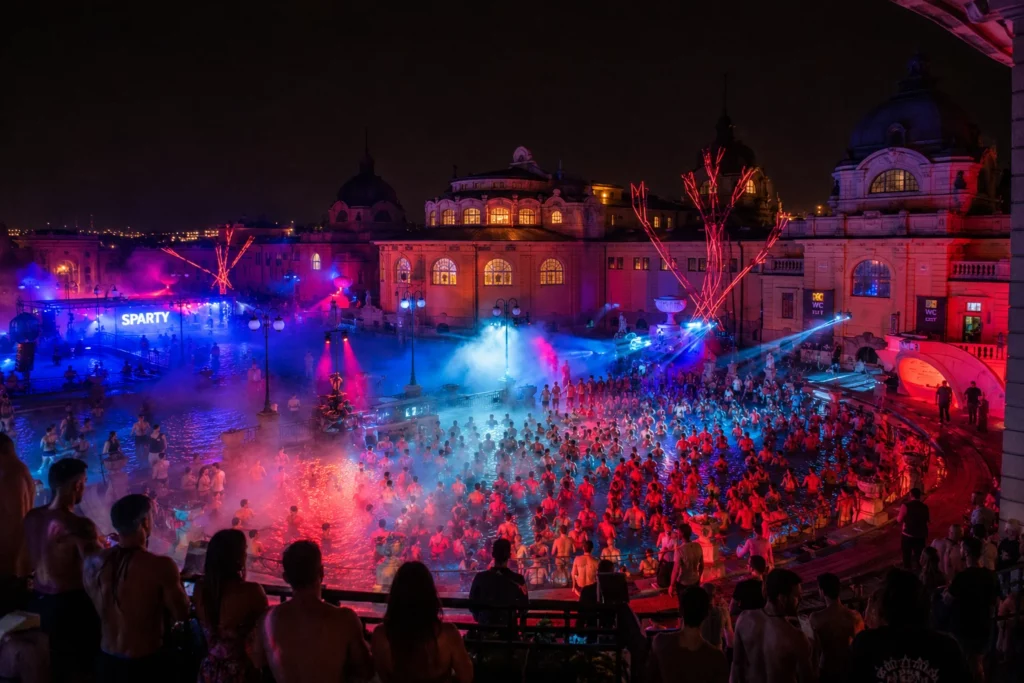
This is not a traditional evening at the spa. People come to dance, drink and socialise in and around the thermal pools, so the atmosphere is much closer to an open-air club than a relaxing bath visit.
What should you expect from a Budapest Sparty?
Sparty events are normally held on selected Saturday nights at Széchenyi Baths. Dates can change or include occasional exceptions, so check the programme for your actual weekend before building the itinerary around it.
Tickets normally include event entry and access to a locker, while upgraded options may include a private changing cabin, faster admission or drink coupons. Package details and prices vary, so compare what is included rather than choosing only by ticket name.
Bring swimwear, a towel and flip-flops. Appropriate footwear is mandatory at the event, and guests without it may need to purchase a pair before entering. Leave unnecessary valuables at the accommodation and use the provided locker or cabin correctly.
Food, outside drinks, glass and other prohibited items cannot be taken inside. Security checks and event rules apply throughout the night, including around the pools.
Treat Sparty as the main event
A bath party requires more preparation than adding another bar to a pub crawl. Changing, storing belongings, entering the venue and getting the group home all need to be considered.
Avoid scheduling an exhausting daytime programme or heavy drinking immediately beforehand. Water, alcohol, warm pools and a crowded party environment can become a poor combination when the group arrives already tired or intoxicated.
Tickets can sell out, especially on popular weekends. Book early when Sparty is one of the group’s priorities and arrange the journey to and from City Park before the night begins.
Our Budapest Spa Party package combines event entry with group coordination and transport options, making it easier to include Sparty in a larger stag or bachelor weekend.
Plan the bath party as the final destination of the evening rather than one stop among several. The experience works best when the group arrives prepared and stays long enough to enjoy the event properly.
Budapest Nightlife for Stag Groups and Large Parties
Budapest is easier to navigate with a stag group than many European capitals because much of the central nightlife is within walking distance. The challenge is not the size of the city but moving ten, fifteen or twenty people through busy venues without turning the night into continuous administration.

Large groups need a little more structure than couples or small parties. That does not mean booking every hour. The objective is to secure the moments where the group could otherwise become separated, refused entry or left searching for the next stop.
Book the difficult parts and leave the rest flexible
Reserve the places where group size genuinely matters: dinner, a smaller bar, a rooftop, a club table or the final venue. Casual drinks between those fixed points can remain spontaneous.
A meeting point and approximate finishing area are often more valuable than a detailed bar-by-bar timetable. If the atmosphere is good, the group should be able to stay without damaging the rest of the plan.
A guided Budapest pub crawl is a practical option for groups that want selected bar stops, local coordination and a club finish without choosing every venue themselves.
Do not make the groom the logistics department
One person should hold the reservations, addresses and main contact details. If the group is large, a second organiser should also have the information in case people split up.
Save the accommodation address in the group chat, agree on a meeting point if somebody disappears and decide how everyone will get home before the first round. These small preparations prevent the groom from spending his own celebration answering calls and reorganising the night.
For the wider weekend structure, our Bachelor Party Budapest guide covers activities, timing and practical group planning beyond nightlife.
Make the group easy to accommodate
Large stag parties attract more attention at entrances. Door staff will notice costumes, noise and visible intoxication before they notice that the group has a reservation.
Arrive calmly, follow the venue’s instructions and be prepared to enter in smaller sets if requested. Confirm fancy dress in advance when a particular club or rooftop matters, because casual pubs and ruin bars are normally more flexible than premium venues.
Keep noise under control in residential streets and do not carry drinks between venues. The Jewish Quarter remains a neighbourhood as well as a nightlife district, and behaviour outside the bars affects both residents and the group’s chances of entering the next place.
A successful stag night does not need twenty people behaving identically. It needs a clear plan for the important moments and enough flexibility for the group to enjoy itself.
What Time Does Budapest Nightlife Start and Finish?
Budapest nightlife usually begins with dinner or drinks around 8–9 pm, while clubs become noticeably busier after midnight. On Friday and Saturday nights, many late-night venues continue until the early morning.
As a practical guide:
7–9 pm: dinner, wine bars, cocktails and relaxed first drinks;
9–11 pm: pubs and ruin bars become busier;
11 pm–1 am: groups begin moving towards clubs and dance venues;
after 1 am: the main club atmosphere is usually established.
These times are not universal. Midweek nights tend to develop more slowly, while special events may attract crowds earlier. Individual clubs also operate on selected days rather than following the same schedule every night.
Check the opening hours and event programme of any venue that matters to the group. There is no need to wait until midnight before going out, but arriving at a dedicated club too early can mean spending the first part of the night on an empty dance floor.
The most reliable structure is simple: begin with dinner or drinks, let the atmosphere build and move towards the final venue when the group is ready.
Getting Around Budapest at Night
Getting around Budapest remains relatively straightforward after the daytime metro and tram schedules begin to change. Central nightlife areas are close enough to explore on foot, while night buses, the 24-hour tram 6 and licensed taxis cover longer journeys.
Budapest reorganised its night public transport network in July 2026, providing wider coverage and more direct connections. Because several routes and interchange points changed, older lists of night-bus numbers may no longer be reliable.
Use BudapestGO for public transport
The easiest option is the official BudapestGO journey planner. It provides current routes, transfers and departure information for the journey you need instead of requiring visitors to memorise the night network.
Regular BKK tickets and passes are accepted on night services according to their normal validity rules. Make sure tickets are purchased and validated correctly, as inspection continues during the night.
Tram 6 operates throughout the night along the Grand Boulevard and connects several useful central areas. Night buses extend coverage towards outer districts and accommodation farther from the nightlife centre.
Walking, taxis and group transport
Walking is usually the fastest option between Districts V, VI and the inner part of District VII. A short walk often makes more sense than dividing the group between several cars.
For longer journeys, use a licensed Budapest taxi ordered through a recognised operator’s app or by phone. Licensed taxis are yellow and display official identification and fare information. Avoid accepting unsolicited rides or venue recommendations from drivers waiting outside busy nightlife areas.
Large groups may benefit from pre-arranged transport when the evening includes several distant locations or finishes outside central Pest. Our Budapest stag transport options compare private transfers, limousines, party buses and other group solutions.
The simplest rule is to walk when the next stop is genuinely close, use BudapestGO for public transport and arrange licensed or private transport when the whole group needs to move together.
How Much Does a Night Out in Budapest Cost?
Budapest is no longer the extremely cheap nightlife destination described in many older travel guides. The cost of an evening depends heavily on whether you choose casual pubs, ruin bars, cocktail venues, rooftops or clubs.
As a realistic 2026 guide:
a standard 0.4–0.5 litre beer is often around 1,500–2,200 HUF;
craft or imported beer may cost more;
straightforward cocktails are commonly around 3,000–4,500 HUF;
cocktails in premium bars and nightlife venues can reach 5,000–6,000 HUF or more;
club entry varies according to the venue, event and date.
These are approximate ranges rather than fixed citywide prices. Two bars on the same street can charge very different amounts, especially when one is a casual pub and the other provides table service, a rooftop view or a premium setting.
Cocktails and premium venues change the budget quickly
A group drinking beer in a casual pub can still have a relatively inexpensive night. Cocktails, table reservations, bottle service, entrance fees and organised entertainment increase the total much faster.
This explains why one visitor may describe Budapest as affordable while another finds it unexpectedly expensive. They may have spent the evening in completely different types of venues.
Decide what kind of night the group wants before setting a per-person budget. A pub crawl, a rooftop evening and a VIP club table should not be calculated as if they were interchangeable.
Check the menu before ordering
Always check the listed prices before ordering in an unfamiliar venue. Do not assume that every bar in a busy tourist area charges similar amounts.
Also check whether a service charge is already included or will be added to the final bill. A separate service charge is common in Budapest hospitality venues, but the percentage and presentation vary.
When paying by card, confirm the amount on the terminal and choose Hungarian forints if offered a currency choice. Paying in HUF avoids the merchant’s dynamic currency conversion rate.
The safest budgeting rule is simple: use the venue’s published menu for exact prices and treat any citywide nightlife figure only as an estimate.
Dress Codes and Staying Safe on a Budapest Night Out
Budapest nightlife is generally relaxed, but there is no single dress code for every venue. What works in a casual ruin bar may not be accepted at a premium rooftop or mainstream nightclub.

What should you wear for Budapest nightlife?
Jeans, a clean shirt or T-shirt and presentable shoes are suitable for most bars and ruin pubs. Smart casual clothing is the safer choice when the evening includes a rooftop, cocktail bar or nightclub with a selective door policy.
Avoid sportswear, beach clothing and heavily themed costumes when admission to a particular club matters. Fancy dress may be accepted in casual venues but can create problems at smarter locations.
Comfortable footwear is important because central Budapest nights often involve considerable walking, standing and older venues with stairs or uneven floors. During colder months, remember that many ruin bars and rooftops include open or semi-open areas.
Check the policy of any venue that is essential to the plan. Door rules can vary according to the event, group size and behaviour even when no detailed dress code is published.
Basic safety on a Budapest night out
Budapest is generally considered a safe destination, but crowded nightlife districts create opportunities for pickpocketing, drink spiking and payment disputes. The official travel advice for Hungary specifically warns visitors about these risks in Budapest bars and busy tourist areas.
Keep phones and wallets secure when a venue becomes crowded. Buy or collect your own drink, keep sight of it and do not accept an unattended drink from somebody you do not know.
Check menus before ordering and review the bill before paying. Be cautious if a street promoter or unsolicited taxi driver is determined to recommend a particular bar, club or adult venue.
Use licensed transport, keep the accommodation address saved and make sure nobody leaves alone without the group knowing how they are getting home.
Carry valid original identification. Clubs may request proof of age, and Hungarian police can carry out identity checks. Do not assume that a photograph or digital copy will be accepted.
If somebody becomes seriously unwell, feels unsafe or requires immediate police, ambulance or fire assistance, call the free European emergency number 112.
These precautions do not require treating Budapest as a dangerous city. They are the same simple habits that help a night out run safely in any busy European capital.
How to Plan a Night Out in Budapest
The easiest mistake is trying to fit too many venues into one evening. Budapest’s centre makes bar-hopping convenient, but a successful night does not require six bars, several reservations and a timetable that nobody wants to follow.
Use this order instead:
Choose the final destination. Decide whether the night should finish in a club, ruin bar, adult venue, bath party or back near the accommodation.
Select the starting area. Begin somewhere that creates a natural route towards the final stop rather than crossing the city repeatedly.
Reserve only the difficult places. Book dinner, a rooftop, a small cocktail bar or a club table when group size could cause a problem.
Leave space between fixed points. Allow the group to stay longer, change bars or skip a stop without damaging the whole evening.
Plan the journey home. Save the accommodation address and decide whether the group will walk, use public transport, order taxis or use pre-arranged transport.
One or two fixed points are normally enough. Everything else should support the atmosphere rather than compete with it.
For a large group, make sure at least two organisers have the reservations, addresses and contact details. Do not leave every decision with the groom, and do not assume everyone will remain together throughout the night.
If nightlife needs to be combined with transfers, daytime activities and other booked experiences, compare our Budapest stag party packages or build a custom weekend around the group.
A good Budapest night has a clear beginning and a reliable finish, with enough freedom in between for the group to enjoy what it finds.
Budapest Nightlife FAQ
Is Budapest nightlife suitable if you do not drink alcohol?
Yes. Most established bars, clubs and rooftops offer alcohol-free beer, soft drinks, mocktails or other non-alcoholic options.
Budapest nightlife is not limited to drinking. Live music, dancing, rooftop views, unusual interiors and the social atmosphere can all be enjoyed without alcohol. Cocktail-focused venues are also increasingly likely to offer proper alcohol-free drinks rather than only basic soft drinks.
Can you go out alone in Budapest?
Yes. Central Budapest has many bars where arriving alone does not feel unusual, especially counter-service pubs, wine bars and venues with informal or communal seating.
Solo visitors should follow the same precautions as in any busy nightlife district: keep control of drinks and belongings, know the route back to the accommodation and avoid following unsolicited recommendations to unfamiliar venues.
Is Budapest nightlife suitable for people over 30 or 40?
Absolutely. Budapest is not one enormous student party district.
The largest ruin bars and mainstream clubs attract plenty of younger visitors, but the city also has cocktail bars, wine bars, rooftops, live music and relaxed late-evening venues. Choosing the right type of place matters far more than looking for a separate over-30 nightlife area.
How do reusable cup deposits work in Budapest bars?
Some larger bars, clubs and event venues serve drinks in reusable cups. The first order may include a deposit, and you may receive a token or similar item with the cup.
To claim any available refund, follow the venue’s instructions and return everything required at the designated collection point. Keep both the cup and token until you understand the system, because losing either may mean losing the deposit. Rules and refund limits vary between venues.
Can you smoke inside Budapest bars and clubs?
No. Smoking is prohibited inside enclosed hospitality venues in Hungary, including bars, pubs and clubs.
Smoking is normally restricted to permitted outdoor or designated areas. Ruin bars can include courtyards and semi-open spaces, so follow the signs and venue instructions if the boundary is unclear.
Do Budapest clubs have cloakrooms?
Many larger clubs and event venues provide a paid cloakroom, and some require coats or larger bags to be left there before entering the main area.
Keep the cloakroom ticket secure until collecting your belongings. If it is lost, the venue may delay collection until staff can verify ownership or until the club closes. Smaller bars may not provide any supervised storage, so avoid carrying unnecessary valuables.
Ready to Plan Your Budapest Night Out?
The right Budapest nightlife plan depends on the group, the preferred atmosphere and where the evening should finish. Choose the important stops, secure anything that requires a reservation and leave enough freedom for the night to develop naturally.
STAG VIP Budapest can coordinate pub crawls, club entry, Spa Party tickets, adult entertainment and group transport as part of one realistic evening or a complete stag weekend.